
When illegal hunting declines, what has actually caused people to change their behaviour?
Is it the presence of wildlife rangers, the risk of arrest and the possibility of punishment? Or does conservation become more effective when local communities see tangible benefits from protecting wildlife?
These questions sit at the centre of modern conservation. Across Africa, conservation organisations invest considerable resources in anti-poaching patrols, surveillance and law enforcement. Many also support community programmes that provide employment, education, healthcare, water infrastructure and alternative livelihoods.
Both approaches aim to protect wildlife, but they operate through different mechanisms. Enforcement discourages illegal activity by increasing the perceived risks and consequences. Community conservation seeks to improve relationships between people and protected areas, reduce the costs of living alongside wildlife and create reasons for communities to support conservation.
A new study from the Serengeti-Mara ecosystem in East Africa offers an interesting perspective on this distinction. Published in October 2026, the research examined how communities understood changes in illegal bushmeat hunting and why their explanations differed depending on their experience of conservation programmes.
Its findings raise an important question for organisations such as Tsavo Trust: should conservation success be measured only by what happens to wildlife and illegal activity, or also by how people’s relationships with conservation change over time?
What does the new research tell us?
The study, Divergent narratives: community perceptions of illegal bushmeat hunting dynamics in the Serengeti-Mara ecosystem, examined communities living around protected areas on the Tanzanian side of the ecosystem.
Researchers surveyed 360 households, conducted 12 focus group discussions and interviewed 24 key informants. They compared communities receiving direct benefits from conservation programmes with those without equivalent programme support.
Participants were asked about their perceptions of changes in illegal bushmeat hunting between 2018 and 2024.
Both groups generally reported that bushmeat had become less available over this period. However, their explanations differed.
Respondents in communities without direct conservation benefits primarily attributed the change to stronger law enforcement and fear of punishment. Those in beneficiary communities also identified conservation education and visible benefits associated with conservation programmes.
This difference is significant because it suggests that people’s experiences of conservation may influence how they interpret changes in illegal hunting.
However, the study did not establish that conservation programmes caused a greater reduction in hunting. Nor did it find a statistically significant difference between beneficiary and non-beneficiary communities in their reported changes in bushmeat availability.
There is also an important distinction between perceived bushmeat availability and independently measured poaching activity. The research relied on people’s recollections and interpretations rather than directly measuring hunting rates throughout the study period.
The findings therefore offer evidence about community perceptions, not a definitive comparison of the effectiveness of enforcement and community programmes.
Nevertheless, they raise an important question: can two communities experience apparently similar conservation outcomes while developing very different relationships with wildlife protection?
Does fear of punishment work?
Law enforcement remains one of the most direct responses to illegal hunting.
Anti-poaching patrols, surveillance, arrests and prosecutions can discourage illegal activity by increasing the likelihood of detection and the consequences of being caught. Removing snares and disrupting hunting operations also provides immediate protection to wildlife, regardless of whether the people responsible change their attitudes.
In conservation science, this is generally described as deterrence-based compliance.
The principle is straightforward: if people believe that illegal hunting carries a sufficiently high risk of punishment, they may become less willing to engage in it.
However, deterrence depends on more than the severity of punishment. The perceived likelihood of being caught, the consistency of enforcement and the ability of authorities to respond all influence its effectiveness.
Enforcement also presents an important limitation. People may comply with conservation laws while continuing to view those laws as unfair or externally imposed. Reduced illegal activity does not necessarily indicate increased support for wildlife protection.
The Serengeti-Mara researchers distinguish this from legitimacy-based cooperation, in which people are more willing to follow rules because they regard conservation institutions as fair, trustworthy and responsive to local priorities.
These are different motivations, even if they produce similar behaviour.
This does not diminish the importance of law enforcement. Organised wildlife crime, commercial bushmeat trafficking and illegal killing can require sustained security operations. But enforcement alone may not address the social and economic conditions that encourage some forms of illegal hunting.
Can conservation benefits change people’s behaviour?
Community-based conservation approaches attempt to address some of those underlying conditions.
Rather than relying exclusively on restrictions and penalties, they seek to create tangible benefits from conservation and reduce the costs communities experience from living alongside wildlife.
These programmes can take many forms, including employment, education, healthcare, water infrastructure, agricultural support and measures to reduce human-wildlife conflict.
The intended mechanisms are varied.
Alternative livelihoods may reduce economic dependence on illegal resource extraction. Conservation education can improve understanding of wildlife and the ecological consequences of hunting. Employment and community investment may strengthen the relationship between local households and conservation organisations.
Equally important is the perceived fairness of conservation.
A community living alongside a protected area may experience crop destruction, livestock predation or restrictions on resource access while receiving relatively little of the income generated by wildlife tourism.
In such circumstances, conservation can appear to impose costs without providing corresponding benefits.
Community programmes may help address this imbalance, particularly when benefits are accessible, fairly distributed and responsive to local needs.
However, these outcomes are not automatic. Providing infrastructure or financial support does not necessarily produce positive attitudes towards wildlife, and positive attitudes do not necessarily translate into reduced illegal hunting.
The Serengeti-Mara study found that beneficiaries were more likely to include education and community benefits in their explanations of changing bushmeat availability. It did not demonstrate that those benefits caused people to stop hunting.
Understanding that distinction is essential when evaluating conservation programmes.
Why people engage in illegal hunting matters
Illegal hunting is often discussed as though it were a single activity with a single motivation.
In reality, the circumstances vary considerably.
Bushmeat hunting may be associated with household food insecurity, limited employment opportunities, commercial demand, cultural practices or combinations of these factors. The incentives facing a household hunting for food can differ substantially from those driving organised wildlife trafficking.
The Serengeti-Mara study identifies several socioeconomic pressures relevant to illegal bushmeat hunting, including poverty, food insecurity, population growth, limited livelihood alternatives and market demand.
These distinctions matter because different drivers may require different conservation responses.
Where illegal hunting is primarily driven by commercial profits, effective law enforcement and disruption of trafficking networks may be particularly important.
Where household vulnerability contributes to hunting, improving livelihoods and food security may form part of a longer-term response.
Human-wildlife conflict introduces another dimension. People whose crops are repeatedly damaged by elephants or whose livestock are killed by predators may develop negative attitudes towards wildlife, even when they do not participate in illegal hunting.
Reducing those losses can therefore be important for building tolerance and cooperation.
The broader lesson is that conservation interventions need to be informed by the circumstances of the communities and activities they are intended to influence.
Conservation in Tsavo: what enforcement looks like in practice
The scale of conservation work in Tsavo demonstrates why enforcement remains essential.
The Tsavo Conservation Area covers approximately 42,000 square kilometres, including national parks and surrounding landscapes. Protecting wildlife across such an extensive area requires coordinated surveillance, ground operations and cooperation between conservation organisations and government authorities.
Tsavo Trust works closely with the Kenya Wildlife Service (KWS), combining aerial reconnaissance, ground patrols, wildlife monitoring and community scout operations.
According to Tsavo Trust’s December 2025 Monthly Report, joint protection activities recorded the following annual totals:
2,036 protection-team field days
1,346 snares and traps recovered
1,454 kilograms of bushmeat recovered
60 arrests through joint KWS/Tsavo Trust operations
13,443 kilometres of foot patrols and 138,043 kilometres of vehicle patrols
The report also recorded 729 hours of aerial operations during 2025, covering approximately 95,618 kilometres.
These figures illustrate the considerable resources required to detect and respond to threats across Tsavo.
They also demonstrate an important challenge in measuring conservation effectiveness.
A high number of recovered snares could indicate substantial illegal hunting pressure. Equally, an increase in recovered snares might reflect improved detection, expanded patrol coverage or more effective intelligence.
Similarly, fewer arrests could indicate reduced illegal activity, but could also result from changes in enforcement effort.
These statistics are valuable operational indicators. However, they cannot independently establish whether illegal hunting is increasing or decreasing, or whether people are becoming more supportive of conservation.
Understanding those outcomes requires additional evidence.
Kamungi Conservancy: conservation beyond enforcement
Alongside its wildlife protection operations, Tsavo Trust supports community conservation initiatives intended to improve livelihoods and strengthen the relationship between people and wildlife.
Tsavo Trust has partnered with Kamungi since 2014. The conservancy covers approximately 100 square kilometres and represents 505 families, comprising more than 5,050 people across 13 villages.
The conservancy is governed through community structures, including an elected board, and supports a range of livelihood and development programmes.
Tsavo Trust’s December 2025 report documents the scale of these activities.
Employment supported through Tsavo Trust and its partners included 33 permanent and 25 casual positions, generating approximately KES 1.69 million in monthly income for the Kamungi community.
Other reported initiatives included:
Healthcare support, with 18,807 patient attendances recorded for 2025.
Water infrastructure, including approximately 1.26 million litres issued during the year.
Education support, including funding two teachers and bursaries for 13 students.
Five women’s village savings and loan associations, with combined savings exceeding KES 1 million.
Beekeeping, poultry projects, agricultural training and other livelihood initiatives.
These programmes demonstrate how conservation partnerships can extend into essential services and household economic opportunities.
Their potential conservation value lies partly in changing the relationship between communities and protected areas.
When conservation contributes to employment, education or reliable access to water, its benefits become more visible in everyday life.
However, these programme figures measure investment, participation and services provided. They do not establish that recipients have become more supportive of conservation or that illegal hunting has declined because of these initiatives.
Those questions would require direct investigation of community attitudes and behaviour over time.

Reducing the costs of living alongside wildlife
One of the most important aspects of community conservation is addressing the costs that wildlife can impose on neighbouring communities.
For households dependent on farming or livestock, an encounter with wildlife can have substantial economic consequences.
Elephants can damage crops and infrastructure, while predators can kill livestock. Repeated losses may undermine tolerance towards wildlife, particularly where affected households have limited resources to recover.
Tsavo Trust and its partners support several approaches to reducing these conflicts in Kamungi.
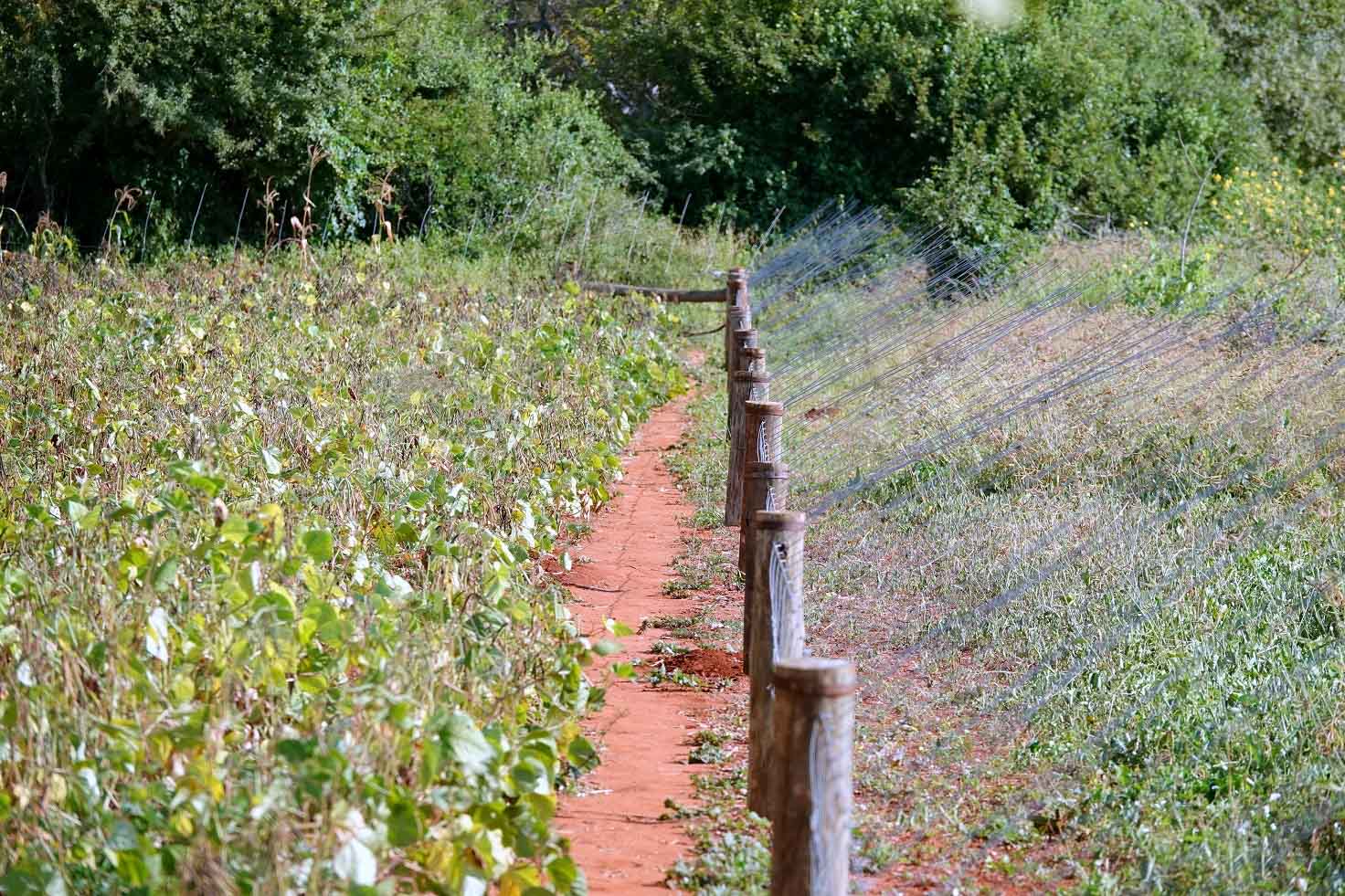
The December 2025 report records the establishment of 10 predator-proof livestock enclosures, alongside beehive fencing and electric fencing intended to reduce crop damage from elephants.
It also reports that the 33-kilometre Mtito elephant fence, completed in November 2021, has been associated with a 95% reduction in human-elephant conflict.
This is a significant reported outcome, although the monthly report does not provide the underlying comparison period or methodology used to calculate the reduction.
Such interventions are relevant to the wider discussion because they address a different dimension of conservation from conventional enforcement.
Rather than simply discouraging illegal activity, they seek to reduce the practical disadvantages of living alongside wildlife.
A household that experiences fewer livestock losses or less crop damage may have fewer reasons to resent wildlife or the institutions responsible for protecting it.
Whether these improvements translate into measurable changes in conservation attitudes or illegal hunting requires further research. Nevertheless, reducing human-wildlife conflict is an important conservation objective in its own right.
Can community conservation and enforcement work together?
The Serengeti-Mara research is particularly relevant to Tsavo because the two approaches it examines are already reflected in Tsavo Trust’s field operations.
Anti-poaching teams work to detect and prevent illegal activity, remove snares and protect wildlife from immediate threats.
Community programmes operate through different mechanisms, supporting livelihoods, improving access to services and addressing some of the costs associated with living alongside wildlife.
These approaches are not mutually exclusive.
Indeed, Kamungi’s community scouts illustrate how the distinction between enforcement and community participation can overlap.
Community-based conservation can therefore involve both direct wildlife protection and assistance to households experiencing wildlife-related problems.
The important question is not necessarily which approach is better, but how they interact.
Enforcement may reduce immediate threats, while community investment may improve the social conditions under which conservation operates. Local cooperation can potentially support the identification of threats, the reporting of illegal activity and the resolution of human-wildlife conflict.
But the effectiveness of this combined approach should not simply be assumed.
The Serengeti-Mara study suggests that conservation beneficiaries and non-beneficiaries can interpret similar reported changes in illegal hunting differently. Whether those differences lead to more durable conservation outcomes remains an important question for future research.
Are we measuring conservation success correctly?
Conservation organisations are often evaluated through measurable activities and outcomes.
The number of snares recovered, arrests made, patrol kilometres completed and animals monitored can all provide valuable information about conservation operations.
Wildlife population trends, mortality rates and changes in illegal hunting activity offer additional evidence about ecological outcomes.
Community conservation programmes are similarly assessed through employment created, infrastructure constructed, people trained and services delivered.
But these indicators do not necessarily reveal how people feel about conservation or why they choose to comply with wildlife protection laws.
That requires a different set of questions.
Do communities trust the institutions responsible for conservation? Do households believe conservation benefits are distributed fairly? Are people willing to report illegal activity? Do they regard wildlife protection as a shared responsibility, or primarily as a restriction imposed by outside authorities?
These questions are more difficult to quantify, but they are important for understanding the social foundations of conservation.
They also help distinguish between short-term compliance and potentially more durable cooperation.
For example, if illegal hunting declines because people fear arrest, continued enforcement may be necessary to maintain that reduction. If people also develop stronger support for wildlife protection, voluntary cooperation may become an additional influence.
However, support for conservation does not remove every incentive for illegal hunting, particularly where organised criminal activity or substantial commercial demand is involved.
A comprehensive assessment of conservation effectiveness therefore needs to consider several dimensions together: wildlife populations, illegal activity, enforcement effort, household livelihoods, human-wildlife conflict and community attitudes.
Ideally, these indicators should be monitored over time so that changes can be evaluated rather than inferred from isolated observations.
What really makes people stop poaching?
The new Serengeti-Mara study does not identify a single explanation for declining illegal hunting.
Instead, it demonstrates that communities can report similar changes in bushmeat availability while attributing those changes to different influences.
For some respondents, enforcement and fear of punishment were the most important explanations. For others, conservation education and visible community benefits also featured prominently.
The study does not establish which approach produced the greater reduction in hunting. Its contribution is showing why understanding community perceptions matters alongside conventional measures of conservation activity.
Tsavo Trust’s work provides a practical illustration of how these different approaches can operate within the same conservation landscape.
Anti-poaching patrols, aerial surveillance and joint operations with KWS address immediate threats to wildlife. At the same time, partnerships such as Kamungi Conservancy support employment, education, healthcare, livelihoods and human-wildlife conflict mitigation.
Both forms of work can be measured, but understanding how they influence people’s decisions requires continued research.
Ultimately, effective conservation depends not only on preventing illegal activity, but also on understanding the conditions that influence people’s willingness and ability to protect wildlife.
Law enforcement remains essential. So too does recognising the interests, challenges and perspectives of communities living alongside protected areas.
The long-term objective is not simply a landscape in which illegal hunting carries consequences, but one in which protecting wildlife is increasingly supported by the people who share that landscape.
By supporting Tsavo Trust, you help fund the anti-poaching operations, long-term wildlife monitoring and community conservation programmes needed to protect biodiversity and support coexistence between people and wildlife across the Tsavo Conservation Area.
Research and sources
Primary research: Michael, M. R., Giliba, R. A., Lohay, G. G. and Thompson, K. E. T. (2026). Divergent narratives: community perceptions of illegal bushmeat hunting dynamics in the Serengeti-Mara ecosystem. Frontiers in Conservation Science, published 2 October 2026.